Heating an RV, Garage or Workshop
These spaces break the normal rules: thin walls, big doors and little insulation. Here is where a plug-in heater helps and where it genuinely will not.
RVs and campers
An RV interior is small, which is in your favor, but poorly insulated, which is not. On shore power, a compact electric ceramic heater is a popular alternative to running the propane furnace: it is quiet, dry and does not consume fuel you have to refill. Expect it to hold a comfortable temperature in mild-to-moderate cold, and to struggle below freezing without help.
- Check your site's amperage. A 30 amp hookup running an air conditioner, microwave and heater at once will trip.
- Keep it on the floor on a flat surface, away from curtains, bedding and upholstery.
- Use the timer overnight rather than continuous unattended running.
- Crack a vent. Sealed RVs build condensation fast.
Garages
The single biggest factor is insulation, not the heater. An insulated, sealed single-car garage can be brought to working comfort by a compact heater aimed at the bench area. An uninsulated garage with a bare metal door loses heat as quickly as you add it, and no plug-in unit will win that fight.
- Insulate the garage door first — it is the biggest single leak and the cheapest fix.
- Seal the gap under the door with a weather strip.
- Heat the zone you work in, not the whole garage volume.
- Never run a heater near gasoline, solvents, paint or the car's fuel filler.
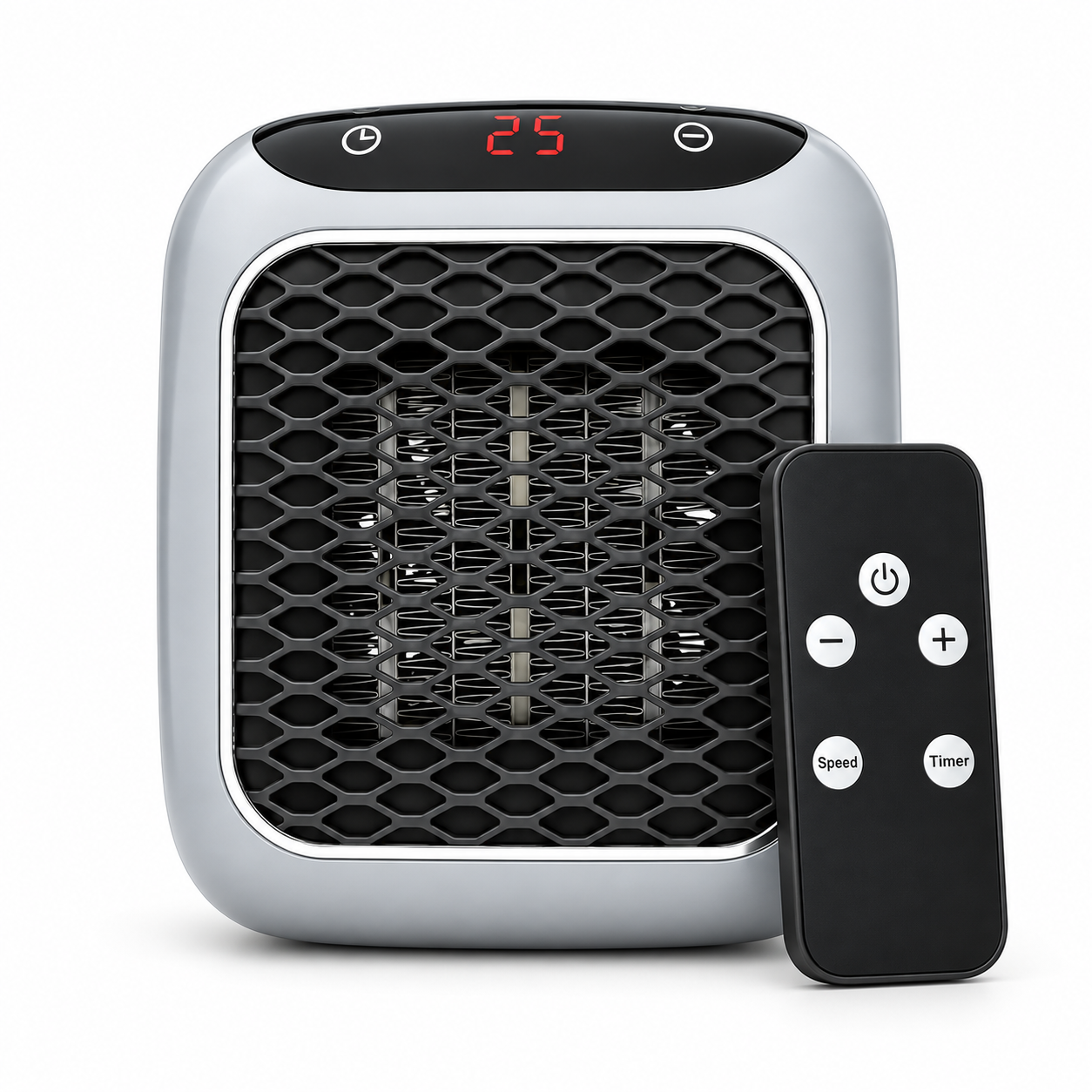
Recommended in this guide
The compact heater this guide keeps coming back to
RapidHeat is a hand-sized ceramic heater that plugs straight into a wall outlet, pushes out warm air in about a minute and switches itself off on a timer. It is built for warming one room properly, not a whole house.
- Warm in ~60 seconds
- Under 30 dB
- Auto shut-off & timer
Workshops and sheds
Same principles, with an added hazard: sawdust and wood shavings are fuel. Keep the heater's intake and outlet well clear of the bench, sweep before you switch it on, and never leave it running when you are not in the room. Run it for 15 minutes before you start work rather than all day.
Expectation setting
A plug-in ceramic heater is a 1,500 watt device and physics does not care about marketing. In a poorly insulated 400 square foot garage in a cold winter, it will make the space you stand in tolerable and nothing more. If you need a genuinely warm garage in a northern climate, you want a dedicated hard-wired or propane unit sized for the space.
Where RapidHeat fits
RapidHeat is well suited to an RV, a small insulated workshop, a home garage work corner or a shed office up to about 130 square feet. It is compact and light enough to carry out with you and plug in where you need it, with overheat and tip-safe protection. See sizing advice or check bundle pricing.
Common questions
Can I use a space heater in an RV?
Yes, and many RV owners prefer an electric heater on shore power over burning propane. Keep it on a flat surface away from fabric, plug it directly into an outlet, and use the timer rather than running it unattended overnight.
Will a plug-in heater heat a garage?
In an insulated single-car garage, a compact heater will make a work area comfortable. In an uninsulated garage with a metal door in a cold climate, it will not — heat leaves as fast as you make it. Insulate and seal first, or buy a much larger heater.
Is it safe to leave a heater running in a workshop?
Not unattended. Workshops contain sawdust, solvents, rags and paper — all things a heater should be kept well clear of. Run it while you are there and switch it off when you leave.
Keep reading
Ready to warm the room you're actually in?
Bundles start at $59 with free USA shipping and a 30-day money-back guarantee.
See bundles & order