Ceramic vs Infrared Heaters
They solve different problems. Pick based on whether you want to warm a room or warm a person.
| Ceramic (PTC) | Infrared | |
|---|---|---|
| Heats | The air in the room | People and objects directly |
| Feels warm in | About a minute | Almost instantly, in the beam |
| Holds room temperature | Yes, with a thermostat | Poorly |
| Noise | Small fan, ~30 dB on low | Usually silent |
| Surface heat | Cool-touch housing typical | Element and grille get very hot |
| Best for | Bedrooms, offices, nurseries, RVs | Garages, patios, workshops, drafty spaces |
How ceramic heating works
A PTC ceramic element heats up and a small fan pushes air across it into the room. Because the element self-regulates its resistance as it warms, it cannot run away to dangerous temperatures, which is a big part of why ceramic units are the default choice for indoor living spaces. The room air warms, circulates and holds a temperature the thermostat can control.
How infrared heating works
An infrared heater emits radiant energy that is absorbed by whatever it lands on — your skin, the chair, the floor. You feel warm immediately even if the air around you is cold, which is the same reason standing in winter sunshine feels warm. Step out of the line of sight and the warmth disappears.
When to choose ceramic
- You want a whole small room to be comfortable, not just your chair
- You are heating a bedroom, home office, nursery or RV
- You want a thermostat to hold a set temperature for hours
- You have children or pets and want a cooler-surfaced unit
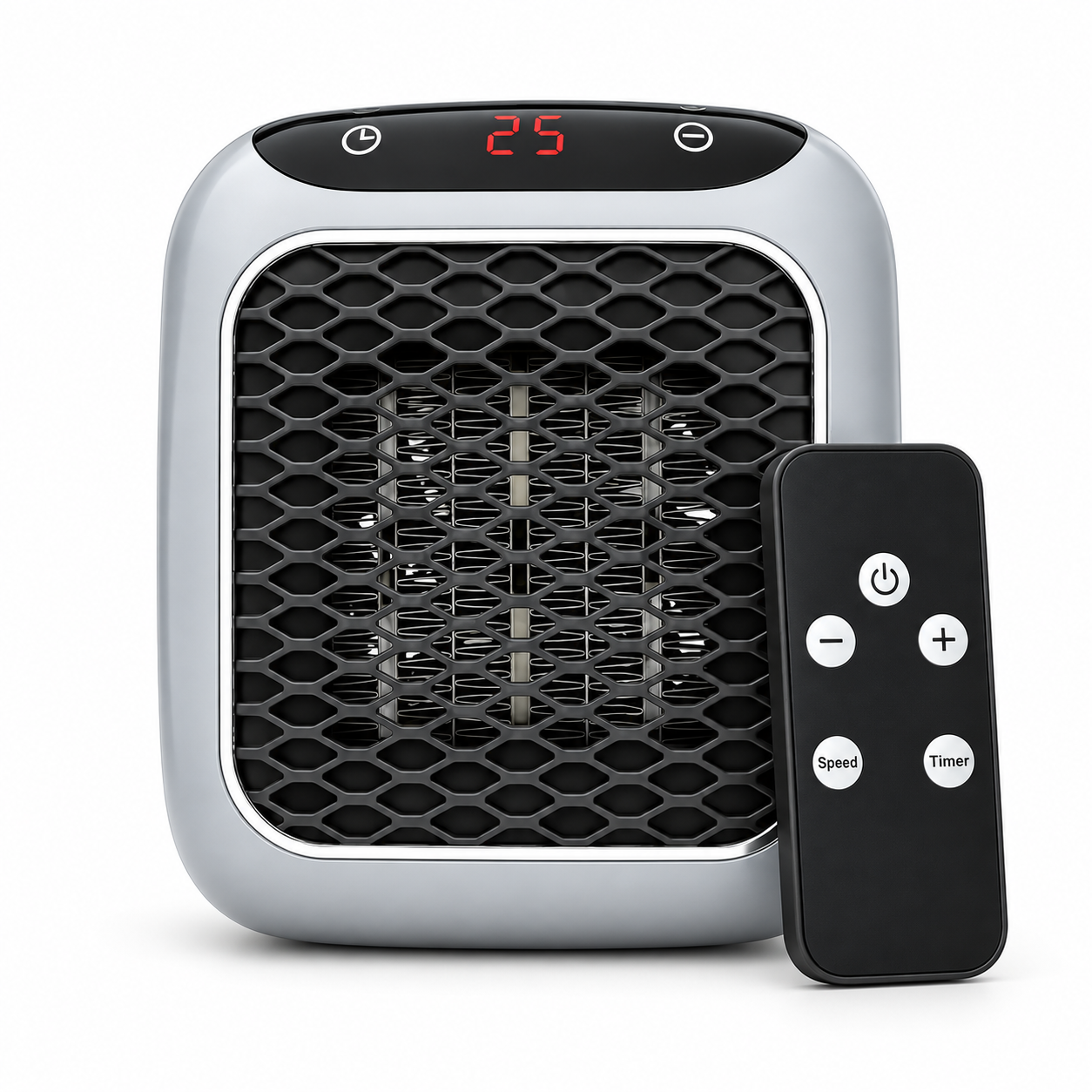
Recommended in this guide
The compact heater this guide keeps coming back to
RapidHeat is a hand-sized ceramic heater that plugs straight into a wall outlet, pushes out warm air in about a minute and switches itself off on a timer. It is built for warming one room properly, not a whole house.
- Warm in ~60 seconds
- Under 30 dB
- Auto shut-off & timer
When to choose infrared
- The space is drafty or open and heating the air is a losing battle
- You need warmth on you in seconds and only where you are standing
- You are outdoors or semi-outdoors — patios, garages, workshops
- You want zero fan noise and do not care about room temperature
The running cost question
Neither is inherently cheaper. Both convert nearly all electricity into heat, so the cost comes down to hours of operation — see running costs explained. In an enclosed room, a ceramic unit with a thermostat typically runs fewer hours because it holds temperature instead of heating continuously.
Where RapidHeat fits
RapidHeat is a ceramic PTC heater built for indoor rooms up to about 130 square feet, with a thermostat, timer and remote. See how it works or check bundle pricing.
Common questions
Is ceramic or infrared better?
Ceramic is better for holding a whole small room at a comfortable temperature. Infrared is better for warming a person quickly in a drafty or open space where heating the air is futile.
Which is cheaper to run, ceramic or infrared?
Per watt they cost the same, because both convert essentially all electricity into heat. The cheaper one in practice is whichever reaches your comfort level with fewer running hours, which in an enclosed room is normally a thermostat-controlled ceramic unit.
Which is safer?
Both are safe when properly built and used. Ceramic units typically run cooler on the surface, while infrared elements and reflectors can get very hot, which matters in homes with children and pets.
Keep reading
Ready to warm the room you're actually in?
Bundles start at $59 with free USA shipping and a 30-day money-back guarantee.
See bundles & order